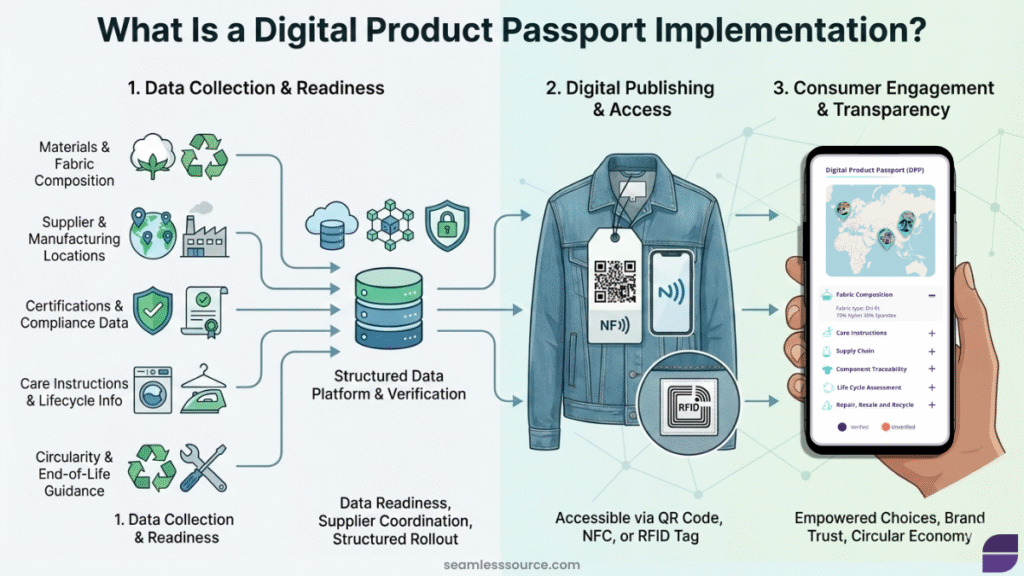
If you’ve been hearing the term “Digital Product Passport ” and wondering whether it applies to your brand, the short answer is: yes, it does. And the sooner you get to grips with it, the better placed you’ll be to future-proof your business, build customer trust, and stay ahead of incoming legislation.
What Is a Digital Product Passport?
A Digital Product Passport (DPP) is essentially a digital record that documents its full journey from raw material to finished garment including where the fibres came from, who made it, how it was manufactured, and what happens to it at the end of its life.
This information is typically accessed via a QR code, NFC tag, or RFID tag attached to the product, making it easy for customers and regulators to verify your supply chain claims.
Why Is It Becoming Mandatory?
The driving force behind DPPs is the EU’s Ecodesign for Sustainable Products Regulation (ESPR), a sweeping piece of legislation designed to make products more sustainable and supply chains more transparent. For fashion and textiles, mandatory DPP implementation is currently scheduled to begin rolling out from around 2027 — but the groundwork needs to be laid well before that deadline arrives.
Crucially, even if your brand is UK-based, this isn’t something you can ignore. If you sell into EU markets — or plan to — you’ll need to comply. And with the UK widely expected to introduce comparable legislation of its own, preparing now makes sound business sense regardless of where you trade.
Why Does It Matter for Smaller Brands?
You might be thinking: This sounds like something for the big brands. I’m a small brand — does it really affect me?
The answer is yes, and here’s why you can view this as an opportunity rather than a burden:
Consumer trust is at a premium. Today’s shoppers are more sustainability-conscious than ever, and they’re increasingly sceptical of greenwashing. A DPP lets you show — not just tell — the story behind your products. That’s a powerful differentiator.
Retailers are already asking questions. As sustainability due diligence becomes standard practice for buyers, having documented supply chain transparency could be the difference between landing a retail stockist and losing out to a competitor who can evidence their claims.
Early movers win. Brands that build their DPP infrastructure now, while legislation is still being phased in, will be far better positioned than those scrambling to comply at the last minute. Starting small — even with a pilot programme across a handful of styles — is a manageable and cost-effective way to begin.
It helps you understand your own supply chain better. The process of mapping your supply chain for a DPP often surfaces information that’s genuinely useful for improving your operations, reducing risk, and making better sourcing decisions.
Where Do You Start?
This is where many SME founders feel overwhelmed — and understandably so. Collecting data from multiple suppliers across different countries, in different formats, is a real operational challenge. The good news is that purpose-built tools now exist specifically for fashion SMEs, making the process far more accessible than it once was.
Platforms like Seamless Source are designed with smaller brands in mind, offering an affordable, guided pathway to getting your DPPs live without needing a huge budget or a dedicated tech team. They handle everything from supply chain mapping and data collection through to creating and verifying your DPPs — and they guarantee implementation within an agreed timeframe.
Learn More — Join Us for Fashion Founder Friday: Digital Product Passport Edition
If you want to understand exactly what DPPs mean in practice for your brand, we’ve put together a very special extended Fashion Founder Friday session dedicated to this topic.
We’re joined by Chathura Sudarshan, Founder of Seamless Source, and Alexandra Perry, Founder of sustainable brand Her – Bodywear, who will share real, practical insights on:
The session takes place on Friday 27th March, 11.30am – 1.00pm via Zoom, and it’s completely free to attend.
As an exclusive bonus for attendees, Seamless Source is offering a remarkable 75% discount on their first-year subscription fees — making this one of the most practical and valuable sessions we’ve ever hosted.
Places are limited, so don’t miss out.
The legislation is coming. The consumer expectation is already here. Your Digital Product Passport journey starts now.
Keep updated with industry news, events and special offers